Stay Connected
Internet that works where you park
Everything we know about getting online from a vehicle: the hardware, the networks, the power cost and the places where nothing will help.
4G and 5G routers
A dedicated router beats a phone hotspot for range, stability and antenna support. Cat-12 is enough for two people working; 5G matters mainly near towns.
Mobile SIMs and data plans
Pick the network for coverage where you travel, not for the headline price. Multi-network SIMs are useful in border regions and across Europe.
External antennas
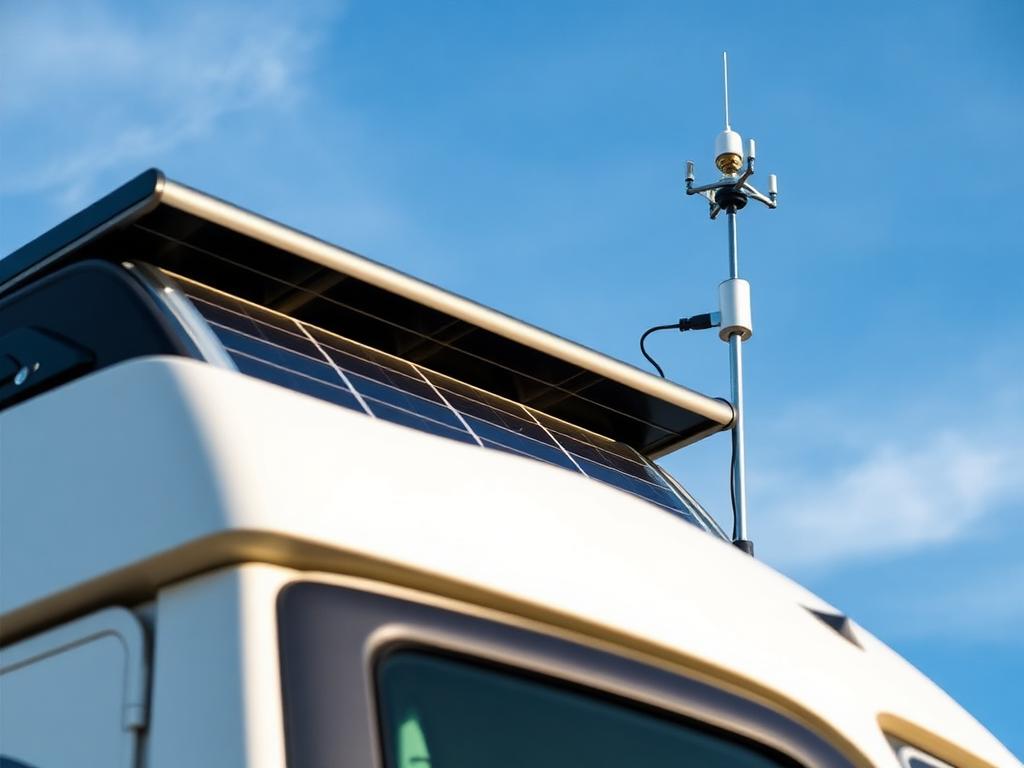
The cheapest meaningful upgrade. A roof-mounted MIMO antenna clears the metal shell of the vehicle and routinely doubles usable throughput in rural areas.
Satellite connectivity
Now viable for vehicles, at a cost in money and watts. Budget 40–60W in use and a clear view of the sky. Worth it if you must be online daily.
Campsite Wi-Fi
Treat it as a bonus. Shared, contended and often capped. A Wi-Fi repeater helps when the access point is across the field.
Off-grid internet
Signal and power are one problem. Routers draw 8–15W continuously; that is a meaningful share of a small solar system over a winter week.
Start here
A setup that covers most people
- 1. A Cat-12 router with SMA antenna ports, wired to 12V rather than an inverter.
- 2. A roof-mounted MIMO antenna on a short, low-loss cable run.
- 3. Two SIMs on different networks, one of them EE or its European equivalent.
- 4. Enough battery to run all of it for two days without sun.